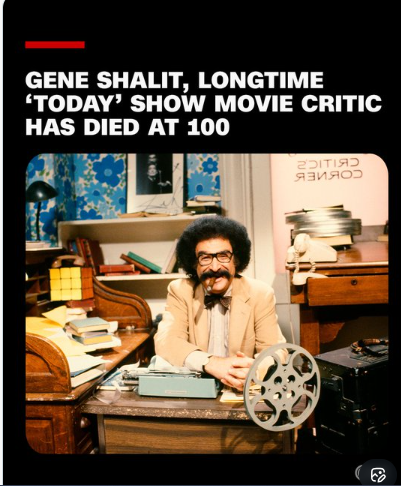
Legendary Today show movie critic Gene Shalit, known for his iconic mustache and pun-filled reviews, died peacefully at 100 on June 12, 2026, after 40 years on the program. His family confirmed he “departed peacefully” following a remarkable century.
NEW YORK — The death of Gene Shalit marks the undeniable end of a golden era in American television broadcasting and popular film criticism. For millions of people across the country, their daily morning routines were inextricably linked to his vibrant, eccentric presence on the small screen. Shalit passed away exactly as he lived: surrounded by the warmth of his family, holding tightly onto the witty, effervescent spirit that made him a beloved household name. As the nation processes the news of his passing in 2026, countless tributes have poured in from fellow journalists, Hollywood titans, and everyday fans who grew up watching his distinctive entertainment segments. When a legendary figure who anchored morning television for over four decades passes away, the cultural impact is felt far and wide across generations.
A Critic Like No Other
Gene Shalit was not merely a movie critic; he was a bona fide cultural phenomenon in his own right. In an age long before the internet democratized movie reviews and social media algorithms dictated box office success, Shalit’s televised opinions held immense, unmatched weight. His instantly recognizable look—an untamed explosion of fuzzy dark hair, an oversized, impeccably groomed handlebar mustache, thick funhouse glasses, and a brightly colored, flamboyant bow tie—made him visually unforgettable. He deliberately defied the aesthetic of the traditional, stuffy, academic film critic. Instead, he presented himself as a beloved, wildly eccentric uncle who just happened to know everything about cinema. But beneath that whimsical and cartoonish appearance lay a remarkably sharp, analytical mind and a profound, lifelong love for the arts.
Eugene Shalit was born on March 25, 1926, in New York City, and he grew up in New Jersey during the Great Depression. From an early age, he exhibited a fervent passion for writing and a razor-sharp, quick-witted sense of humor. He eventually attended the University of Illinois at Urbana-Champaign, where he threw himself into collegiate journalism. There, he began to hone his unique comedic voice, famously writing a regular column cleverly titled “What Shalit Be?”—an early, brilliant indicator of his lifelong love affair with groan-inducing puns. Following his graduation, Shalit did not immediately enter television. His illustrious career began quietly in the world of print media. He worked as a tenacious journalist and entertainment columnist for McCall’s magazine, and later achieved prominence as the senior film critic for Look magazine in the late 1960s. His witty prose and encyclopedic knowledge of cinema made his columns incredibly popular among readers, inevitably catching the discerning eyes of network television executives.
The Golden Era of Morning Television
In 1970, Gene Shalit joined NBC’s flagship Today show as a part-time contributor. His undeniably unique voice and magnetic on-camera charisma quickly made him a resounding fan favorite among early risers. By the start of 1973, he had been officially elevated to the show’s full-time arts editor, a highly coveted position he would hold with steadfast distinction until his eventual retirement in 2010. For forty extraordinary years, Shalit was the definitive, trusted voice of the Today show’s “Critic’s Corner.” He offered audiences across America an accessible, highly entertaining, and enormously influential guide to the latest theatrical releases, best-selling books, and major cultural events.
What truly set Shalit apart from his esteemed contemporaries was his masterful, relentless use of wordplay. While other prominent critics might deliver dry, overly academic analyses of a film’s cinematography, pacing, or underlying narrative structure, Shalit vastly preferred to deliver rapid-fire, clever puns that would elicit loud groans and genuine laughter from his co-hosts and the studio audience alike. He firmly believed that the act of talking about entertainment should, in and of itself, be highly entertaining. This egalitarian approach democratized film criticism, making it accessible to millions of everyday working people who simply wanted to know if a weekend movie was truly worth the rising price of a theater admission ticket.
Shaping the Landscape of Film Criticism
Shalit’s enduring influence on the landscape of American film criticism simply cannot be overstated. He emerged dynamically during a highly transformative period in news media, effectively helping to transition the art of the film review from the exclusive, quiet domain of print newspapers to the loud, dynamic, and visual medium of television. He bravely paved the way for other prominent critics to eventually achieve national prominence on the small screen. While contemporaries like the legendary Roger Ebert and Gene Siskel eventually gained massive, dedicated followings with their syndicated, highly debated “thumbs up, thumbs down” format, Shalit steadfastly maintained his unique, unshakeable stronghold on morning network television. Although Ebert’s approach was often more firmly rooted in formal film theory and historical context, both Shalit and Ebert shared a fundamental, deep-seated respect for the audience and a passionate desire to guide viewers toward truly meaningful cinematic experiences.
As Shalit’s fame grew exponentially throughout the 1980s and 1990s, he organically transitioned from merely commenting on pop culture to becoming a permanent, celebrated fixture within it. His distinctive, larger-than-life appearance and bombastic, joyful delivery made him a prime, willing target for affectionate parody. He was immortalized in various animated programs, cementing his elevated status as a recognizable icon for younger generations who might not have even watched morning news broadcasts. The hit, irreverent animated series Family Guy frequently referenced him, heavily leaning into his unmistakable silhouette and legendary penchant for puns to generate laughs. Perhaps most famously, the globally beloved cartoon SpongeBob SquarePants featured a memorable character directly inspired by him named “Gene Scallop,” a gruff but ultimately fair and insightful food critic who visited the Krusty Krab restaurant. Shalit fully and warmly embraced these parodies. He possessed the rare self-awareness to recognize that being spoofed on massive programs like Family Guy and SpongeBob was the ultimate, undeniable testament to his pervasive, lasting cultural impact.
A Devoted Family Man
Throughout his incredible, century-long life and bustling career, Shalit remained deeply grounded by his unwavering commitment to his loved ones. He was happily married to his beloved wife, Nancy Lewis Shalit, in 1950. Their beautiful union was a profound source of immense strength, stability, and happiness for Gene until her tragic, premature passing in 1978. Together, they navigated life’s challenges and raised six successful children. Balancing a high-profile, demanding national television career with the everyday, exhaustive demands of a large family was no small feat, but Shalit was deeply, fiercely devoted to his children’s upbringing and success. Among his children is his son Peter Shalit, a prominent physician and respected author who has frequently and fondly spoken of his father’s unwavering emotional support, fierce intellect, and boundlessly curious nature. Following Nancy’s devastating death, Gene Shalit remained fiercely dedicated to preserving her vital memory and meticulously nurturing their growing family, ensuring that her loving presence was always deeply felt in their busy home.
The Final Chapter and an Enduring Legacy
While the official cause of death has simply and quietly been attributed to the natural culmination of a long, incredibly robust life, his passing at the monumental age of 100 in 2026 represents the closing of a massive, unforgettable chapter in broadcasting history. Living to witness a full century is a remarkable, rare milestone, and Shalit reached it with the exact same grace, infectious humor, and quiet dignity that clearly defined his personal life off-camera. Just months prior to his passing, he joyously celebrated his 100th birthday intimately surrounded by his children, numerous grandchildren, and closest loved ones, marking a century of a life truly and exceptionally well-lived.
In thoroughly examining the vast, colorful legacy he leaves behind, it is abundantly clear that Gene Shalit was much more than just a guy with a funny mustache who talked rapidly about movies. He was a genuine pioneer of television journalism, a master, empathetic communicator, and a man who deeply understood the fundamental, universal human need for joy, escapism, and entertainment. He gracefully navigated the often-cynical, hyper-competitive world of national media with an unshakeable, radiant sense of optimism and a genuine, infectious appreciation for the performing arts.
His televised reviews possessed the immense power to make or break a film’s weekend box office performance, yet he never wielded that considerable power maliciously or arrogantly. Even when circumstances required him to deliver a overwhelmingly negative review of a major blockbuster, Shalit always did so with a mischievous twinkle in his eye and a highly clever turn of phrase, ensuring that his sharpest critiques were never perceived as mean-spirited or deeply personal. He fundamentally understood that behind every single movie, even a deeply flawed one, were hundreds of hardworking, dedicated individuals desperately trying to create something meaningful for the world.
As we pause to reflect on the sad news that he has died, we collectively remember the countless, bright mornings he spent warmly in our living rooms, enthusiastically bringing us the magic, glamour, and excitement of Hollywood through his completely unique, unparalleled lens. The modern television landscape has fractured and evolved dramatically since his prime rating years, with countless streaming services, digital platforms, and social media influencers now dominating the critical conversation. Yet, there remains a deep, profound nostalgia for the bygone era of broadcast television where a single, universally trusted voice could easily unite millions of diverse viewers in a shared, daily cultural experience.
Gene Shalit was unequivocally that trusted voice for multiple generations of Americans. The somber news of his passing naturally brings a wave of sorrow to those who remember his vibrant broadcasts fondly, but it also brings a profound, lasting sense of gratitude for the literal decades of infectious laughter and sharp cinematic insight he generously provided. The expansive world of film criticism is undoubtedly, significantly poorer without his presence, but his massive influence continues to resonate clearly in the enthusiastic, highly accessible style of countless modern reviewers who unknowingly learned from his groundbreaking example.
From his early, scrappy days writing clever print columns to his highly emotional final sign-off on the Today show stage, Shalit’s amazing journey was a beautiful testament to the undeniable power of authenticity. He never once compromised his unique style or intellect to fit a preconceived, sanitized corporate network mold. Instead, he boldly forced the rigid medium of television to lovingly adapt to him, decisively proving that high intelligence, silly humor, and a wildly eccentric personal aesthetic could all coexist harmoniously and triumphantly on a national stage.
The essential cause of celebrating the arts and finding joy in everyday life was Gene Shalit’s lifelong, unyielding mission, and he accomplished it with unparalleled, spectacular flair. As the final curtain falls respectfully on his extraordinary 100-year journey in 2026, we bid a fond, tearful farewell to a true American original. The beloved pop-culture critic, the devoted husband to his late wife Nancy, the loving father to Peter and his siblings, and the utterly irreplaceable television icon will be profoundly missed, but his joyous laughter and his legendary, pun-filled reviews will happily echo through the hallowed halls of television history forever.